When Grief Doesn't Look Like Sadness
If you're moving through anticipatory grief with your animal companion, you're slowly noticing the changes. The grey hairs are coming in on their muzzle. The stiffness in how they move. The slowing down. All the little modifications you've made to support them. And maybe, along with all of that, you've noticed twinges of sadness. And if you are further in your journey, you notice the increase in vet visits, the meds, their daily changes and the ups and downs of this journey.
But there's something else so many of us aren't prepared for.
Anger, frustration, irritability, emotional exhaustion or the feeling of being reactive in ways that just don't feel like you.
This isn't about you really being short towards yourself, others or your animal. It's your body waking up to the reality of the situation. And because of that, it is easy to begin judging and shaming yourself during in this time.
Anger and frustration are common in anticipatory grief and in the level of caregiving needed now, and all of this is rarely spoken about. These emotions carry a silent stigma that most don't talk about. But these emotional responses do not mean you are a bad person in any way. They do not mean you aren’t doing enough, or that your love is changing toward your animal.
They are signs that your body and your nervous system are carrying too much.
When you are caring for an aging, ill, or declining animal, you are living inside a silent, invisible, chronic stress. It creeps in so gradually that you don't realise how long it's been adding to your body as invisible weight, until it is simply too much. This is caregiver compassion fatigue.
You haven't been focused on yourself. You've been focused on your beloved animal and their needs.
Watching their symptoms.
Silently anticipating their impending loss.
Trying to make the "right" and "best" decisions.
Managing their medications and appointments.
Navigating the uncertainty.
Sleep-deprived from worry, or from their restlessness in the middle of the night. Putting on a brave face and keeping everything functioning, while still carrying everything else in your life.
Your nervous system doesn’t get a chance to catch its breath, let alone settle. And because anticipatory grief isn't recognized the way grief is socially after a death, so many carry all of this silently. And alone.
So what happens next is that anticipatory grief and an overloaded nervous system begin coming out differently.
Not only as tears.
But now as irritability. Impatience. Anger. Resentment. Shutdown. Numbness. Feeling constantly on edge.
Snapping at loved ones, or at veterinary staff. Wanting people to just stop giving advice. Overthinking constantly. Hypervigilant to every symptom and every change. Physically exhausted while your mind doesn’t know how to stop or rest.
And when you feel frustrated and short, it can also come out towards your animal, and then you immediately feel guilty or ashamed.
I know this one from the inside.
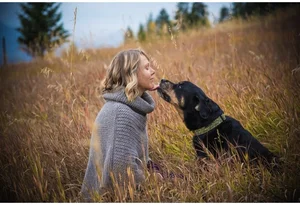
I snapped at Bosphorus a few times when he wouldn't eat. I was in the middle of a season of major life change, exhausted, stretched thin, and scared of losing him when I needed him the most. And in that moment, all of it came out sideways, at the one being, my boy, whom I loved and needed most.
He felt my frustration and exasperation, came, sat on my feet, and leaned his body into me. It was never about him. It was my helplessness and my exhaustion, wearing anger's face. (At that time, I didn’t know he had a tumour inside him, and this was why he was beginning to struggle to eat)
I now clearly know that when I am easily frustrated and get snappy, it means I am exhausted and on edge. It has become my signal, not that something is wrong with me per se, but that I need sleep and self-care. That my own cup has run dry. So now with Ceelo, my cat, I know to stop, switch, and make my care a priority, so I can keep showing up for both of us.
If you've been in the same place, remember this. You have never faced this chapter before, in this relationship, with this animal. This is hard. And it's messy. You are a human.
Many of us move between different states of the nervous system during this time.
Sometimes fight energy. Irritability, anger, urgency, needing things done a certain way.
Sometimes flight. Constant researching, overthinking, never being able to mentally stop.
And sometimes freeze, or collapse. Numbness, disconnection, fatigue, feeling unable to make any decision at all.
We can move through all of these within the same day. One moment, deeply connected and tender. The next, overwhelmed and reactive. Then collapse and feel guilty for being overwhelmed.
This does not mean you are doing anything wrong. It makes you a human who is overwhelmed, and all the emotions that come with compassion fatigue do not erase the love in your heart underneath it all.
It is always there.
There's a belief I meet often in this work. That during our animal's aging or end-of-life journey, we should only feel calm. Patient. Compassionate. Spiritually grounded.
And I want to seriously untangle something here, because this is where many people get caught in wrong thinking.
Being regulated does not mean being calm.
Regulation is not the absence of anger, fear, or grief. It is not composure. It is not stoicism, holding it together on the outside while everything churns underneath. Stuffing emotions down and appearing calm is actually the opposite of regulation. It is a disconnection from yourself.
Regulation is staying connected to yourself while whatever is here moves through you. It is noticing the frustration rising and letting it be here, instead of shaming it. It is feeling the fear, the sadness, the anger, and staying present with yourself in those feelings, rather than abandoning yourself to appear composed.
You can be crying and regulated. You can be angry and regulated. Regulation is holding presence with what is coming up and allowing it to come up. It is befriending and giving space to the emotion from a neutral place.
Anticipatory grief is complex. You can feel love and resentment. Gratitude and dread. Acceptance and fear. Presence and panic. All at the same time. Your nervous system was never meant to hold prolonged uncertainty, especially when love and loss are both involved. Every one of those emotions is allowed to be here and has it’s place.
The animals I have communicated with and my own share:
Yes, they feel our overwhelm, but they do not judge it. They understand, in their way, that we are carrying something heavy, and they hold us in the same unconditional love they always have. Even in our snappy moments. Even on the days we have nothing left.
While you are caring for them, remember they are tending to your heart. This journey has never been one-directional. You are walking it together.
So what actually helps?
Not more pressure to "do this perfectly." More gentleness. More permission to feel what you feel. More moments where you stop judging your reactions and instead receive them as information. Information about yourself that is about where you are at in that moment. And that where you're at is allowed. And with that information, when you see it with neutrality, you now have choices for change where needed.
Sometimes the most supportive thing you can do is simply pause long enough to notice and say aloud:
I am overwhelmed.
My body is carrying a lot.
This is hard.
I am grieving while I am caregiving.
I am scared to lose you.
That awareness alone begins softening the inner pressure. And loosens the grip of any shame or guilt. Your nervous system deserves support and nurturing too, especially now, in these tender, charged moments, as you walk beside your beloved animal through one of the hardest chapters of your relationship with them.
Society has never taught us how to do this, nor has it prepared us to love a beloved animal through their decline to their passage. And every journey with each relationship you have with an animal will be different.
So wherever you are in yours today, I hope you remember you do not have to carry this alone. Your animal is emotionally supporting and preparing you, just as much as you are caring for them.
You are on this journey together.
An Invitation to Walk Your Journey Differently: Learning to Be with your emotions and how to be honest and share them with your animal.
If something in this piece stirred a longing to walk this journey with your animal differently, with more presence, less pressure, and a deeper way of being together, this is exactly what I created Embracing Deeper Connections for.
It's an eight-module course for pet guardians navigating aging, illness, anticipatory grief, and end of life with their beloved animal. It will meet you wherever you are in your journey and gently show you how to be with your animal and with yourself through it all.
The online version is available now, ready whenever you are: EDC ONLINE
And twice a year, I offer it live, where we walk through it together: EDC LIVE
Both are here when you're ready.
Would you like to learn more like this? I recommend following the endandaftermedium YouTube channel.
a note on how I write:
Because what I share in my blogs touches real grief and lived experience, I want to be open with you: I use AI tools the way I would with an editor or proofreader. To help organise my thoughts, tighten wording, and catch typos. Every piece is shaped, reviewed, and finalised by me, and reflects my lived experience. The heart of this writing is always my own.

needing support and resources?
click below