You Don't Have to Relive the Last Loss With the Next
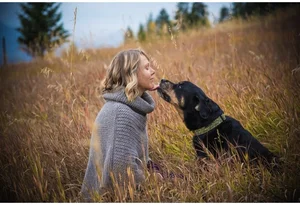
The end-of-life journey isn't something happening to your animal. It is happening with them. It is also happening with you and within the relationship you share. You are in it together, the way you have been in everything together.
Many tend to think their role in this time with their pet is one-directional: that you care for them, tend to them, and support them toward the end. And, yes, you do. But your animal is also tending to you, too. They are preparing you. The love and care move in both directions, just as it always has between you.
The rally, and the rollercoaster
If you've walked this road in a relationship with a pet before, you know the journey and the good and bad days of it. Your animal has a low day or stretch of a few days, and you begin to wonder if this is the time. You may even consider booking the appointment. And then, they rally and have a good day or stretch of good days again. They eat. Their eyes brighten. They are more like themselves, and you let the bad days drift away and maybe even forget how unwell they'd been. Relief floods in, then confusion. Was I wrong?
This is one of the most confusing parts of this journey with them, and the confusion is normal. The ups and downs are not you misreading the situation. They are part of the journey itself.
Over time, you may notice the gaps between the highs and lows grow shorter, and that the highs are a little lower than the ones before. Your heart sinks a little more each time. But each of these cycles is doing quiet, necessary work. for both of you and your relationship. Every low followed by a rally gives you another chance to be more present with your pet and savour this time with them. It also gives you the chance to move through the array of emotions and, each time, come a little closer to accepting what's ahead. I have come to see this rollercoaster as a necessary part of what I call preparation for the eventual separation for both you and them. I have been through it many times personally and see this as all part of the relationship journey. And how each moment invites you to another layer of yourself and the love you share.
Each up and down invites you to explore, honestly:
Am I ready to let you go? Have I reached a place where I can give you permission from my heart and not my head? Can I lean into our love even more to hold us both through this?
They are not afraid, and your presence is a gift to them
In my years of communicating with animals, one truth comes up each time: they are not afraid of dying. Animals understand it as a natural part of living. So often, people believe they are afraid on their final day, and yes, they can appear that way. But they are also responding to the energy of the situation: you, the vet, the environment, and everything that is happening around them. They have never felt your energy this heightened before.
On this final day, the emotional intensity is often unlike anything they have experienced with you. They may sense your fear, grief, tension, or uncertainty- the emotions you may be trying to hold back because you don't want them to worry, or because you feel you need to be strong for them.
But you don't have to hide your emotions from them.
When you acknowledge what you're feeling rather than fighting it, the energy between you can shift. Acknowledgement brings you into the present. You may breathe a little more deeply. Your body may soften. Your nervous system may settle a little more. And your animal can experience that change in you.
This doesn't mean you need to be calm, positive, or okay. You may cry. You may be scared. You may feel angry, heartbroken, or completely unsure of yourself. All of that can be present.
What matters is that you aren't asking yourself to carry it all alone while also trying to keep your animal from sensing what is happening.
They don't need you to be emotionless. They need you to be present.
When you can acknowledge, “I'm scared. I'm sad. I don't want this to be happening. And I'm here with you,” you may find there is less internal struggle. And in that space, there can be more room to notice your animal, listen to them, and be with them rather than becoming consumed by what you fear is coming next.
The more present you can be with your own emotions, the more you acknowledge your grief, your fear, your sadness, the less power they have over you and the less your animal responds to them. When we avoid our feelings, distract ourselves, or push them down, our animals often sense what we don't hold. When we tend to ourselves honestly, they are freed to simply be themselves, and to rest in the love between you rather than in your worry. This is how you care for each other, on this journey, from a place of love and mutual respect.
A story of two dogs
I want to share the story of a client, anonymously, with her permission, because it holds the journey and everything I'm sharing.
I've known this client for years, and worked alongside her and her animals in all the seasons of her pets’ lives. She had two dogs, siblings from the same litter, who'd been with her since they were young, brothers bonded to each other, and woven into everything as they aged and became senior dogs. About a year and a half ago, one of them died suddenly. No warning. It was an emergency, and then he was simply gone.
I was there for her after his shocking loss. Sudden losses land differently in the body. Dr. Aimie Apigian calls it heart shock, the response our nervous system has when a loss is sudden, and we have no chance to prepare. It's a different grief than the kind we get to see coming, and it asks for its own time as the shock needs time to wear off and the garvity of what happned to begin to land and integrate in the body.. (I've written more about sudden loss and how it impacts the body’s nervous system here: [Sudden loss blog].)
This last year and a half has been a time to navigate the shock and uncover the depth of the grief for my client and also for her dog, who was lost without his brother. Together they supported each other in their grief journey. With each other's help, they slowly found joy and life again and had new adventures together.
Four weeks ago, her surviving dog had his own emergency, and after that visit, he came home and was now considered palliative. So there she was facing a new loss she could now see coming, while still carrying the memories of the shock of the one she hadn't. If you've ever grieved one animal while bracing yourself for another, you know how much the heart can be asked to hold at once.
We began working together the way we always had, communicating with her dog to understand how he was doing and what he needed her to know, and holding her through the anticipatory grief and the layers of grief from her previous loss now ready to be seen. And in that space, grieving the dog in front of her also started to heal the grief for the one she'd lost so suddenly. The two losses were different, but not separate. New losses have a way of bringing up old griefs from now ready to surface.
The night she came home from that emergency visit, she had a dream. Her dog who had passed came down a stairway toward her. She was carrying her living dog up those same stairs, and where they met, she lovingly placed him into the arms of his sibling in spirit and stood there, watching the two of them go on together. She woke with a peace she hadn't felt in a year and a half.
From that place, she could do what her grief had been too heavy to let her do before: she could be present. She actively grieved, loved, and cared for her dog until he died at home on his own weeks later. Through our sessions and check-ins along the way, the weight she'd been carrying the guilt, the fear, the second-guessing so many of us know was lessening. And into the space it left, now came acceptance, arriving at its own pace, on her timeline and not a moment before.
Her grief became what I call pure grief. Not easy grief; there's no such thing. Still hard, still messy, still exhausting, because that is what grief is. But it was grief she was no longer afraid of, no longer trying to outrun. She could let it move through her, note by note.
In these weeks, her dog was supporting her the entire time. Preparing her. And when he finally passed, it was as though he'd waited until he knew she was ready. We spoke the afternoon after he died, and this time, her grief didn't leave her lost in questions. She understood it. She understood how it was moving through her body, her mind, her heart, and her soul, and why. She was aligned with her grief and with it.
Her second loss was nothing like her first. The sudden one had knocked the breath out of her, leaving her in shock, her body caught entirely off guard. This recent one, though no less painful, was one she could now walk toward with awareness, presence, and time. One loss does not mean the next one will be the same. Each loss is its own, shaped by its own circumstances and relationship, and each one can be met differently. If you've lived through a devastating loss before, it does not mean the next one has to break you in the same way. You carry parts of it that support you and parts that come up to be moved through in the new one. And from it all, you change and grow.
Grief, as David Kessler describes it, can feel like an orchestra of many instruments and what I've come to understand in my own work is that healing isn't about silencing any of them. It's about learning to be with all the notes of the whole piece. This dog gave her the gift of time, and she had the courage to walk it. And she never walked it alone. Her family supported her, and I walked beside her, helping her find her own steadiness in it.
What this means for you
If you've had a difficult, sudden or even traumatic loss, it doesn't have to be the blueprint for the ones that follow. What happened before doesn't decide what's ahead. Each goodbye is its own, just like each relationship is its own, and the one in front of you can be met with more awareness, more presence, and more love than you may believe is possible right now.
You don't have to know the ending to begin being more present for the chapter you're in now. You have this animal. You have this relationship. You have this precious time. The most loving thing you can do is meet your own emotions honestly, so you can be here, really here, for the love that is still unfolding between you.
You are on this journey together.
Walk Your Journey Differently: Learning to be with your emotions and how to share them with your animal.
If something in this piece shifted to walk this journey with your animal differently, with more presence, less pressure, and a deeper way of being together, this is exactly what I created Embracing Deeper Connections for.
It's an eight-module course for pet guardians navigating aging, illness, anticipatory grief, and end of life with their beloved animal. It meets you wherever you are in your journey and gently shows you how to be with your animal and with yourself through it all.
The online version is available now, ready whenever you are: EDC ONLINE
And twice a year, I offer it live, where we walk through it together: EDC LIVE
Both are here when you're ready.
Would you like to learn more like this? I recommend following the endandaftermedium YouTube channel.
a note on how I write:
Because what I share in my blogs touches real grief and lived experience, I want to be open with you: I use AI tools the way I would with an editor or proofreader. To help organise my thoughts, tighten wording, and catch typos. Every piece is shaped, reviewed, and finalised by me, and reflects my lived experience. The heart of this writing is always my own.

needing support and resources?
click below