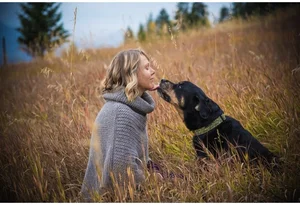
When Your Animal Who Helped You Through Loss Is Now Dying
After someone you love dies, your animal can become the reason you get up in the morning.
They need breakfast. They need to go outside. They come looking for you when you’ve been sitting in one place for too long. They’re there at night, when the house is quiet, and there’s nobody to talk to.
You don’t have to explain why you’re crying or find something to say. You can be exactly as you are with them.
Over time, you find a way to keep going, and they’re a big part of how you do that.
So when your animal now becomes ill, is aging or is reaching the end of their life, the fear can be overwhelming. You’re facing the loss of your steady companion, and also the relationship that helped you get through the deaths of other people you loved.
“Who will be here for me now?”
This question is real and heavy, and it deserves an honest, compassionate response. Telling someone to treasure the time they have left with their pet, or to be grateful for the years they’ve shared, doesn’t meet the fear and loneliness beneath it. They can feel deeply grateful for that love and still fear how they’ll face life without their beloved companion.
You already know what life after a loss feels like
In my work, I see how much history can be carried in the relationship between a person and their animal.
There may have been the death of a spouse, a parent, a sibling, a child or a close friend. Sometimes several losses happen close together, with very little time to find your footing.
Through it all, your animal has been there.
They were there during the illness, the phone calls, the loss, the days when you could barely function. They were there when other people returned to their own lives, and you were left trying to work out how to live in a world that had changed.
Now your animal is beginning their end-of-life journey, and you know something about what comes next. You know the absence and emptiness that follows. You know what it’s like to reach for someone who is no longer there. You know life carries on around you while your world has stopped, and you are trying to take in what happened.
And you honestly don’t want to go through that again.
That makes sense. Knowing grief doesn’t make you ready. You may still be grieving the people who died, and now you’re being asked to face losing your animal who has helped you bear it.
You may feel exhausted long before the goodbye happens.
When your animal carries a connection to someone who died
Sometimes your animal was part of a shared life. As a couple or family, you adopted them together. You had familiar routines with the person who has died. Your animal’s presence in the home holds the memories of a time when everyone was still there.
Or perhaps you took in a family member’s animal after their death. Caring for them became a way of continuing your connection with the person you lost.
Feeding them, learning their habits, and watching them settle into your home can bring comfort and sadness together as you grieve alongside one another. You each had your own relationship with the person who died, and you both carry that history.
Over time, you build a relationship of your own. They become part of your routines, your home, and how you find your way after the loss.
Now, as their health declines, you’re facing the loss of this relationship, too.
Many people have shared that preparing to say goodbye feels like losing their last living connection to the person who died. Having this animal in their life allowed something of that shared life to continue. Now they’re facing another goodbye, and another change in how they feel connected to the person they lost.
That grief can be difficult to explain. Sometimes it does not even have words.
This upcoming loss can bring past grief forward
An animal’s illness or end-of-life care can bring back memories of caring for someone else. Watching for changes. Waiting for news. Feeling helpless. Having to make decisions while frightened and tired.
When losses keep coming, grief can feel relentless. There may be moments of relief, but very little room to find one’s feet before another illness, another change, another goodbye.
The weight of it all may feel too heavy. Advice about coping isn’t a substitute for being heard and understood. You may want to talk about your current situation with your animal, then naturally share about the person or other animal you lost.
You need somewhere to land and catch your breath. Somewhere you can share how much you’ve lost, how frightened you are of losing again, and how you’re afraid of losing yourself in it all.
“Who will support me now?”
Your animal may be the relationship where you feel most understood, loved, and seen without having to explain yourself. Even when you have people who care about you, the companionship with your animal is different. The fear of losing your animal's daily presence can leave you feeling alone in ways others often don’t recognize.
The fear of being alone often includes the empty home, the loss of daily touch, or nobody needing you in the same familiar way. A loss of purpose. It can also mean losing the company that made evenings bearable or the routine that helped you get through each day.
For some older pet parents, another reality looms: they know this will be their last animal.
They have shared that their age, health, or changing living circumstances now mean they cannot take on the responsibility of another dog or cat. Alongside saying goodbye to their companion, they’re now facing the end of a way of life they’ve known for decades.
These changes can also bring up questions:
Who am I now? What matters to me? How do I want to live from here?
These questions don't have immediate answers. They acknowledge that life is changing yet again.
Support needs to meet that reality.
Caring for your animal while receiving care for yourself
You’re caring for your animal, tending to their comfort and trying to understand what they need. And underneath it all may be the fear: “How am I going to live without them?”
I hear these words often in my work, and I know that fear personally, too.
You deserve care in this, too, and someone who understands why it hurts so much.
Sometimes our time together includes gently preparing for those moments and finding support that you can lean on before and after the goodbye. You don't need to feel ready or at peace. There is space for your fear and grief, and for the love you and your animal are still sharing.
Honouring your animal who has been there through it all
“You were here through so much. Sometimes getting up to care for you was what got me through the day. I’m so glad we’ve had this time together, and I’m going to miss you.”
You can say it in your own words. You might cry, repeat yourself, or find that all you can manage is, “Thank you. I love you.” In my work as an animal communicator, I understand how animals feel their person’s energy and hold space for them through what they’re experiencing. What you share goes beyond the words you manage to say. You don’t have to find an exact way to express what they mean to you.
You might want to write down the memories and tell your animal what they have meant to you.
Honouring them happens in the everyday care you provide. Making them comfortable. Adjusting routines. Finding ways to slow down and spend time together.
After the goodbye, you will miss things like the sound of their feet. Their place beside you at night. Having someone to greet when you come home.
Those everyday absences are real, and so is your grief. Hold yourself in kindness.
Support for you and your animal
If you recognize yourself in these words, we can work together in several ways. You may need somewhere to bring your grief, a chance to hear your animal’s perspective, or support as you find your way through this time together.
Grief support sessions give you space to speak honestly about what you’re facing, including the earlier losses this goodbye brings forward. Together, we can tend to what you’re carrying and explore how to build support around you.
End-of-life animal communication sessions offer an opportunity to hear your animal’s perspective, understand their needs, and acknowledge what you’ve shared as you prepare for the goodbye.
Embracing Deeper Connections Online is an eight-module course you can explore at your own pace when there is time in your animal’s journey. It supports you in being with your emotions and staying connected with your animal through aging, illness, anticipatory grief, and end of life.
You can explore EDC Online, book a grief support session or end-of-life animal communication session, or contact me if you’re unsure where to begin. We can look together at what would support you and your animal now.
Would you like to learn more like this? Follow my endandaftermedium YouTube channel.
a note on how I write:
Because what I share in my blogs touches real grief and lived experience, I want to be open with you: I use AI tools the way I would with an editor or proofreader. To help organise my thoughts, tighten wording, and catch typos. Every piece is shaped, reviewed, and finalised by me, and reflects my lived experience. The heart of this writing is always my own.

needing support and resources?
click below