search our blog…
a note on my writing:
Everything I share- the ideas, the stories, my personal and professional experience walking beside animals and their people, is entirely my own. I use AI tools the way I would work with an editor or proofreader: to help organise my thoughts, tighten wording, correct grammar, and catch typos. Every piece is shaped, reviewed, and finalised by me, and reflects my lived experience.
My voice is my own, and sharing openly how I work is part of honouring the trust you place in me.
When Grief Doesn't Look Like Sadness
If you're moving through anticipatory grief with your animal companion, you're slowly noticing the changes. The grey hairs are coming in on their muzzle. The stiffness in how they move. The slowing down. All the little modifications you've made to support them. And maybe, along with all of that, you've noticed twinges of sadness. And if you are further in your journey, you notice the increase in vet visits, the meds, the daily changes and the ups and downs.
But there's something else so many of us aren't prepared for.
Anger.
Or frustration. Or irritability. Or emotional exhaustion. Or feeling reactive in ways that just don't feel like you.
This isn't about you really being mad at your animal. It's your body waking up to the reality of the situation. And because of that, it is easy to begin judging and shaming yourself during in this time.
Anger and frustration are common in anticipatory grief and caregiving and are rarely spoken about. They carry the stigma that you can’t talk about it. But these responses do not mean you are failing in your care or your animal. They do not mean you don’t love them or aren’t doing enough.
They are signs that your body and your nervous system are carrying too much.

Not Rushed. Not Forced. Just Met.
There's a moment I see over and over again, in my sessions and in my own life with animals.
An animal is aging. Or ill. Or slowly declining. Not eating the way they used to. Not bouncing back the way we hoped. Not "themselves" in whatever way we've quietly decided that should look like. And their person, who loves them with everything they have, starts trying to help them through it. Maybe it's more supplements. More vet visits, or seeing other practitioners. More food options to entice them at the food bowl. More watching of them. More wanting and willing for them to be okay.
All of this is from a place of love. And all of it carries something underneath that we rarely stop to notice.
When our animals are sick or fading, something in us reaches out. Even when our words are soft. Even when our hands are gentle. Underneath our care, there is often a silent energy saying:
Please eat something.
Please get better.
Please hold on.
Please don't decline yet.
Please show me you're still okay.
They feel this. Not through our words. Through how our body naturally braces in uncertainty. Our hovering. Our sighs at the food bowl. Our watching. The way we search their face and body for signs. Animals are constantly reading the relational field between us. They feel when our care carries our hidden urgency. Often before we know or feel it ourselves.
I learned this long before I knew anything about animal communication.
Anticipatory Grief and the Pressure to Get It Right
When you deeply love an aging or ill animal, part of you is always watching.
You notice every breath, every change in appetite, every subtle shift in behaviour or energy or the way they move through a room. You tell yourself you are simply being attentive and caring, which you are. But often what is happening beneath that watchfulness is something much deeper and much more exhausting than simple attentiveness.
It is anticipatory grief. And it does not only live in your emotions. It lives in your thoughts, your body, your sleep, your decision-making, and the quiet background hum of your days.
The Weight Beneath the Watching
When we love an animal who is aging or ill, we can find ourselves slowly shifting from living in the present moment to worrying about what is coming. The questions begin to accumulate:
Am I doing enough? Did I miss something? Am I making the right choices? Am I holding on too long? Am I letting go too soon?
These questions come from love. They come from the enormous responsibility you feel toward your animal and your deep desire to ease their suffering, make the right decisions, and not miss something important. They come from wanting more time and from living in a situation that offers very little certainty.
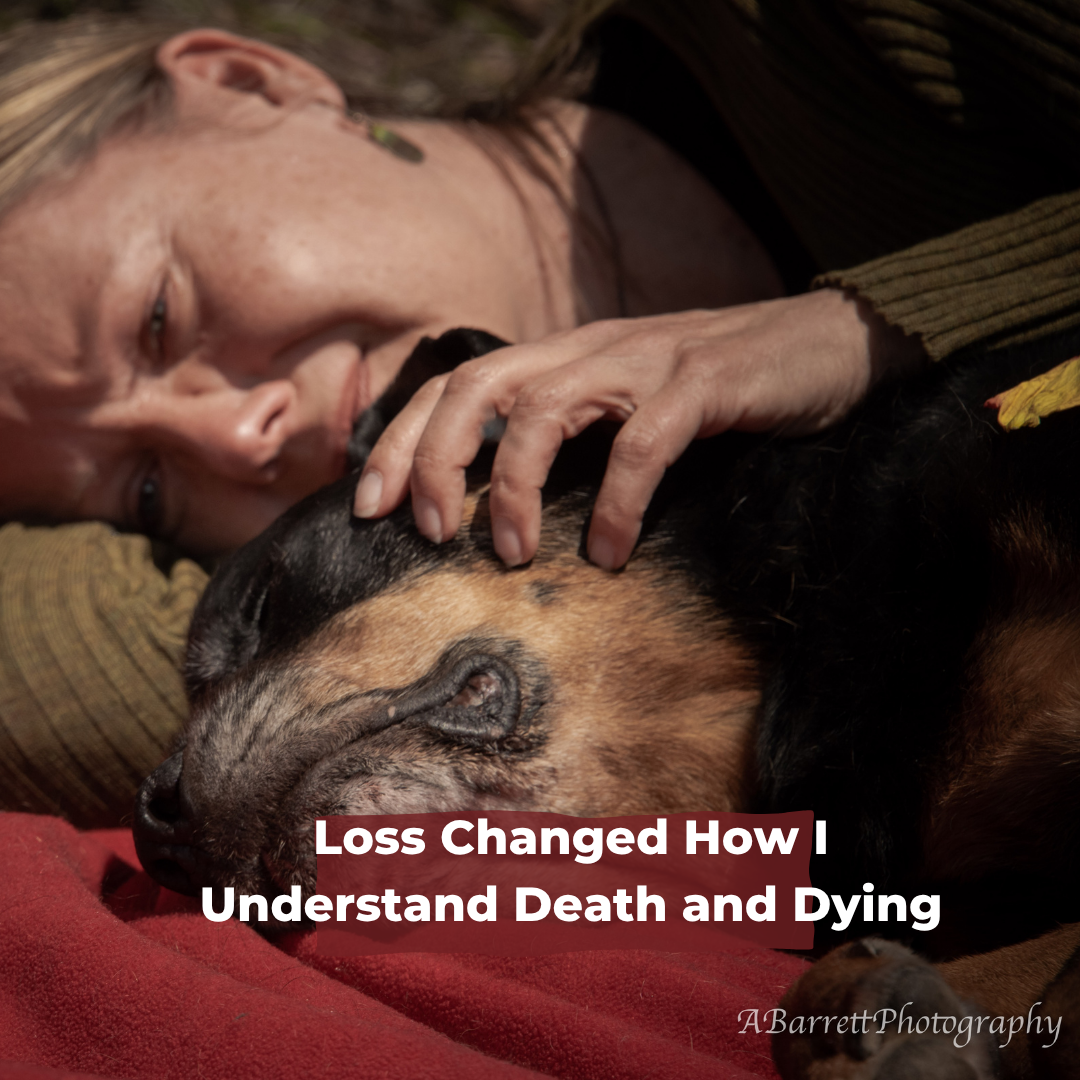
Loss Changed How I Understand Death and Dying
I was 17 when I had to make the difficult decision to euthanize my horse, Tim. I remember feeling the weight that I was ending the life of my best friend.
What made it even harder was that I was completely alone in it.
My parents didn’t have the capacity to discuss or support me emotionally, and they said the decision was only mine to make. All of us were floundering in fear, helplessness, and overwhelm, without understanding the gravity of showing up. I didn't have words for all that was happening inside me then, and it's now how my adult self understands my 17-year-old self felt abandoned in one of the hardest moments of her life.
I desperately wished someone had been able to hold space for me, so I could hold space for Tim.
Instead, I shut down. My body grieved what I couldn’t express. I stayed in bed for two weeks. I barely spoke. When I went to school, I felt numb and disconnected, like a ghost moving through the day. I had nosebleeds for four days straight. Looking back now, I understand my body was carrying grief that had nowhere to go.
Read more…
Navigating Overwhelm: Returning to Balance With Your Beloved Animal
Overwhelm has a way of arriving quietly, when emotional reserves are already low. It can surface after difficult news, noticing a shift in your animal’s health, or when life asks more of you than your heart or body has capacity for. Sometimes it’s that one small request layered onto an already full emotional plate. And you may find yourself trying to hold everything together, searching for answers, or pushing forward even when you're stretched thin.
In these moments, overwhelm is never a personal failing; it’s a nervous system response to your body saying, “Please slow down. I need support.”
Read more…

What Happens When You Numb Emotions: Why Connection and Love Can Feel Muted
Avoiding the emotions of anticipatory grief that you don’t want to feel is often exactly what prevents you from feeling the ones you do want: love, joy, and connection with your animal.
When we’re walking alongside a beloved animal during illness, aging, or the end of life, it’s natural to want to protect ourselves from the hard emotions, as we often believe we are protecting our beloved animal from our pain. Grief, sadness, fear, and worry can feel overwhelming. Sometimes, without even realizing it, we try to push them down, avoid them, or distract ourselves from them. It’s a very human response. And our animals feel this struggle within us.
Here’s the tender truth: trying to selectively turn off emotional pain doesn’t work. When you numb or suppress difficult emotions, you’re not just turning off sadness, anger, or anxiety; you’re dampening your entire emotional range.
Read more…
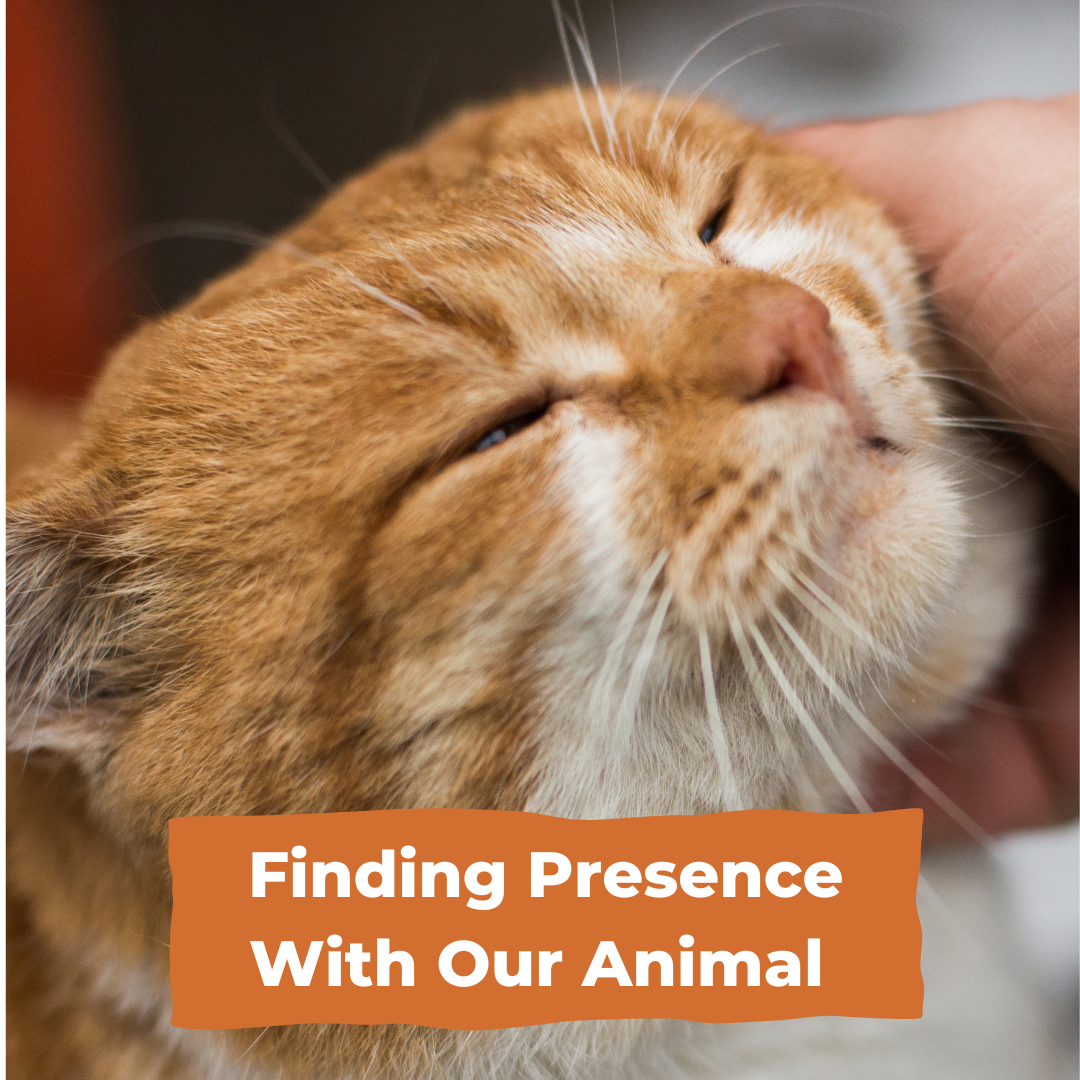
Walking With Anticipatory Grief: Finding Presence With Our Animal
There’s a moment in every pet parent’s life when the bubble quietly bursts. The one where we hold onto the hope that our beloved companion will live forever. It’s not that we don’t know, deep down, that life has limits. But when the signs of aging show up, when a diagnosis is spoken aloud, or when the vet gently says, “We need to start preparing…” the world shifts…
Suddenly, you are walking with grief that hasn’t happened yet.
This is called anticipatory grief.
It’s tender, messy, and often overwhelming. One moment you may feel fear clawing at your chest, the next you’re swept into sadness… and then, out of nowhere, a deep wave of gratitude for every soft pawstep beside you. These emotions don’t arrive in a straight line. They swirl and collide, often leaving us exhausted and questioning whether we’re “doing it right.”
But here’s the truth:
There is no perfect way to walk this path. There is only the way that is yours, guided by love.
Read more…
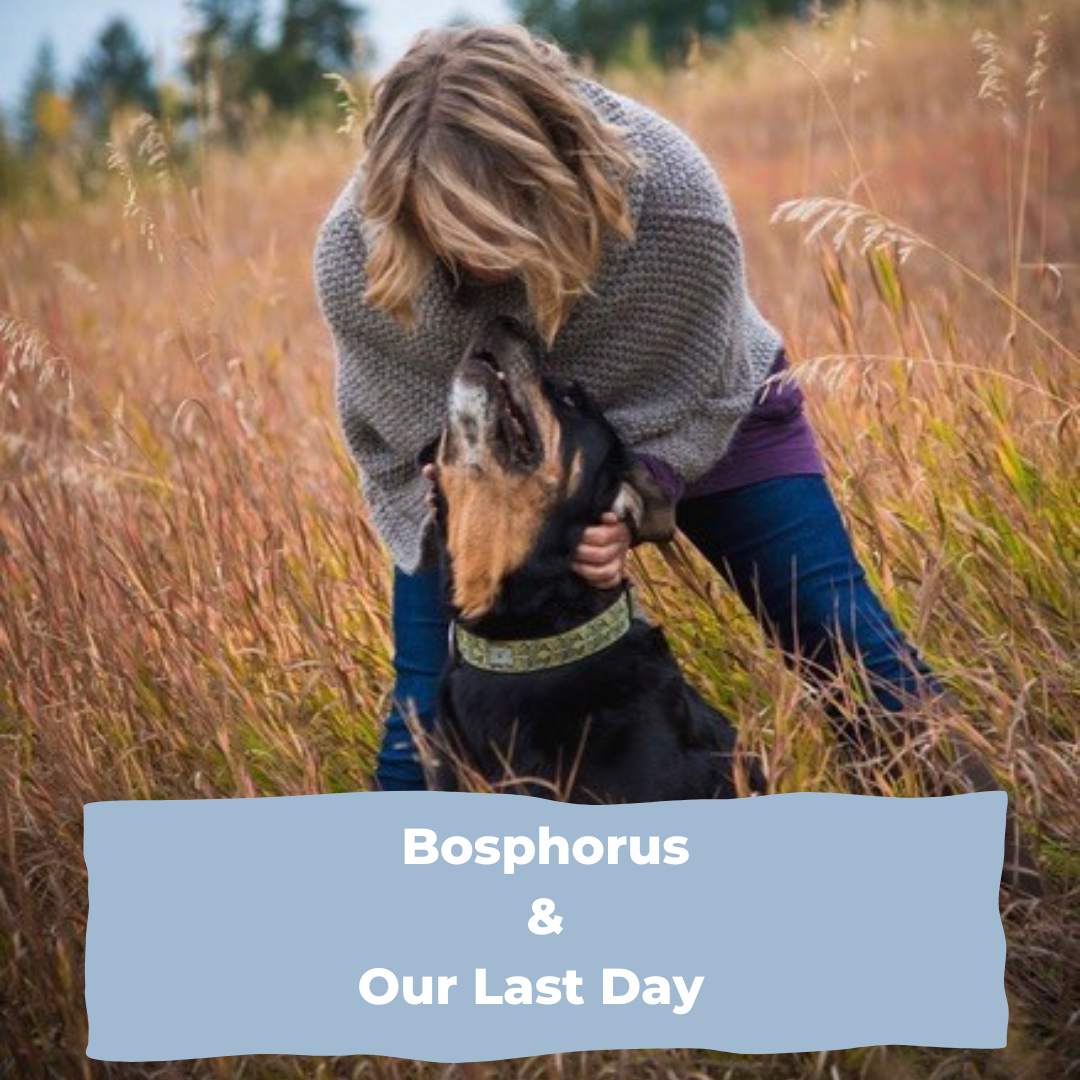
Bosphorus and Our Last Day
I still remember the moments I first began to notice Boshporus slowing down. How he hesitated before jumping onto the bed and in the car, how our long walks started became shorter, his naps longer, his sleeps deeper and snores louder and his once boundless daily energy now ebbing with the days. At first, I brushed it off—a bad day here and there, maybe a little stiffness. But deep down, I knew he was shifting and changing with age. And with that realization, an ache settled into my heart, a grief landing inside for what was changing before my eyes.
Loss comes to us in many forms, but with our pets, it often begins long before their final goodbye. It starts in the small, almost imperceptible ways—when their bodies grow tired, when they take more time to get up, when their enthusiasm for favourite activities begins to wane. This loss isn’t just about their eventual passing; it’s about witnessing the life you shared starting to transform into something different. The reality of your time together lessening. The grief it brings is anticipatory, and it is real.
Read more…